
15 Small Dining Room Decorating Ideas That Save Space
A small dining area doesn’t have to feel cramped. It just needs smarter choices: furniture that fits, colors that open things up, and a layout that leaves room to move. These small dining room decorating ideas work for a narrow galley, a corner of a studio apartment, or a tiny dedicated room. Every one of them is meant to make the space feel bigger without a major renovation.
1. Round Tables
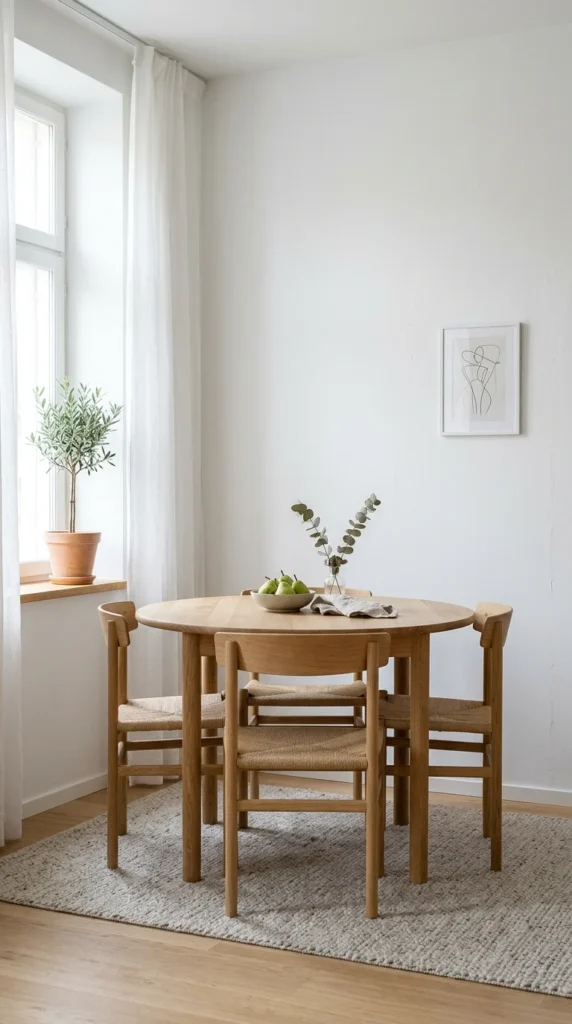
Round tables are one of the easiest space-saving dining room ideas. With no sharp corners to bump into, people can move around the table far more easily in tight quarters. They’re also surprisingly flexible. When guests drop by, you can usually squeeze in one more chair without anyone getting jabbed by a table leg. The curved shape also softens a small room, so it feels less boxed-in.
2. Built-in Banquettes
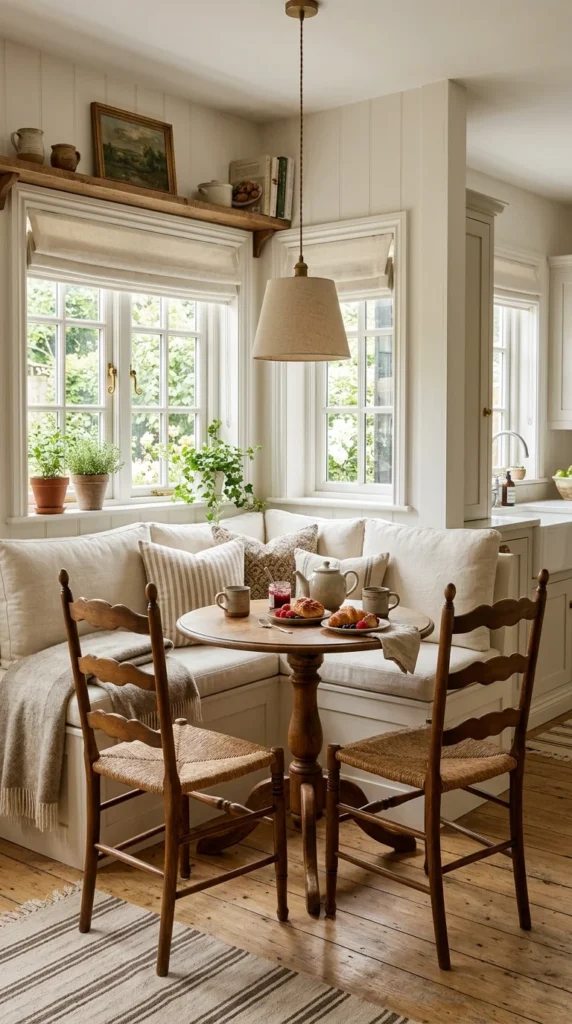
Banquette seating, the kind you see in restaurant booths, works really well in small homes. Pushing the seating against a wall or into a corner means you no longer need the extra gap behind freestanding chairs for pulling them out. Banquettes are also great for hidden storage. Many designs have flip-up seats or drawers underneath, which is handy for seasonal linens and kitchen gadgets you don’t use every day.
3. Ghost Chairs
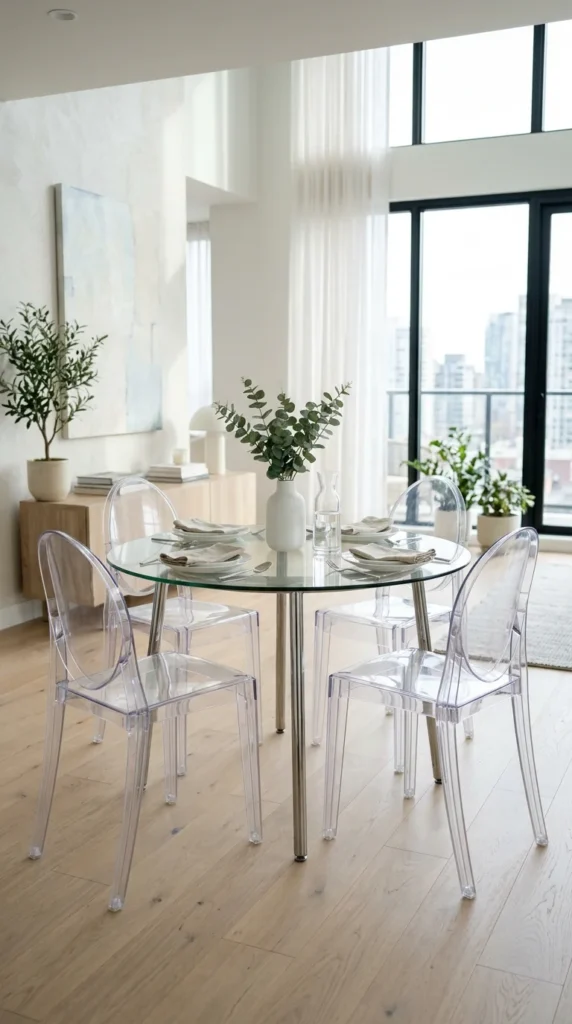
In a small room, visual weight matters. Ghost chairs, usually made from clear polycarbonate or acrylic, take up real space but barely register to the eye. You can see straight through them to the walls and floor, so the room looks less cluttered. They give you a light, modern look and are just as comfortable and practical as any other dining chair.
4. Mirrored Walls
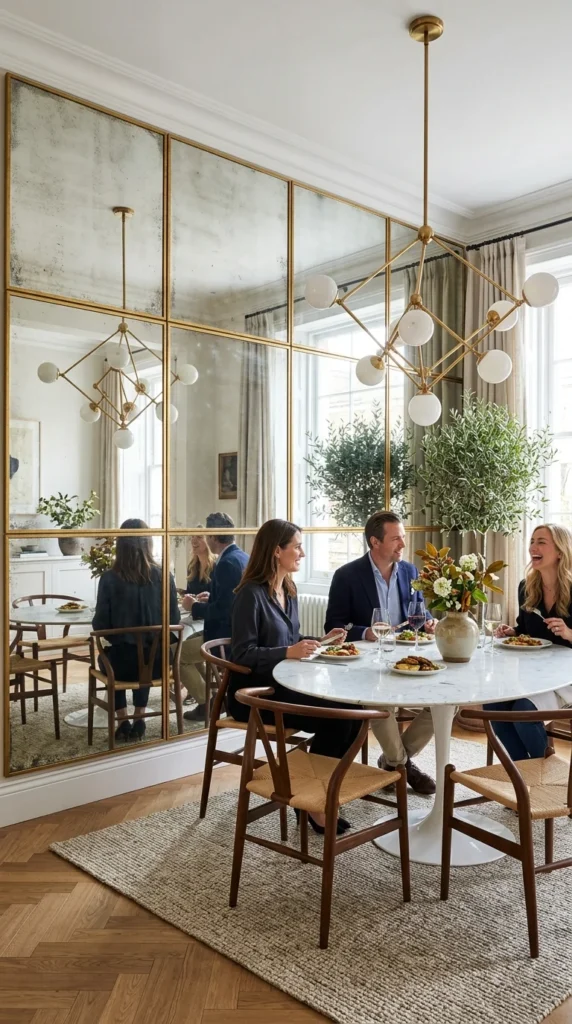
Mirrors are the oldest trick in interior design because they work. One large, well-placed mirror, or a set of mirrored panels, can make a small dining room look twice as big. They bounce around both natural and artificial light, and they create the feel of a “window” where there isn’t one. If a standard mirror feels too harsh, try a smoked or antiqued finish. It adds depth without the stark glare.
5. Fold-Down Tables
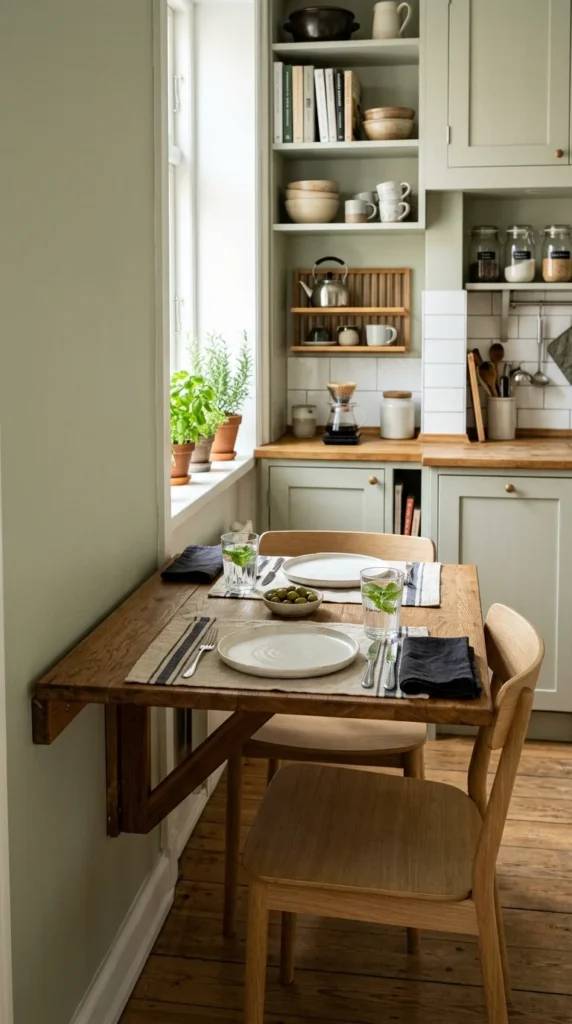
If your space is truly tiny, a wall-mounted fold-down table can solve the problem. When you’re done eating, it tucks flat against the wall and frees up the whole floor. When it’s time for dinner or a work session, you flip it up and lock it into place. It’s a great fit for multi-purpose rooms where the dining area needs to disappear during the day. If your table doubles as a desk, these cozy home office decor ideas can help you set up a workspace that feels warm too.
6. Pedestal Bases
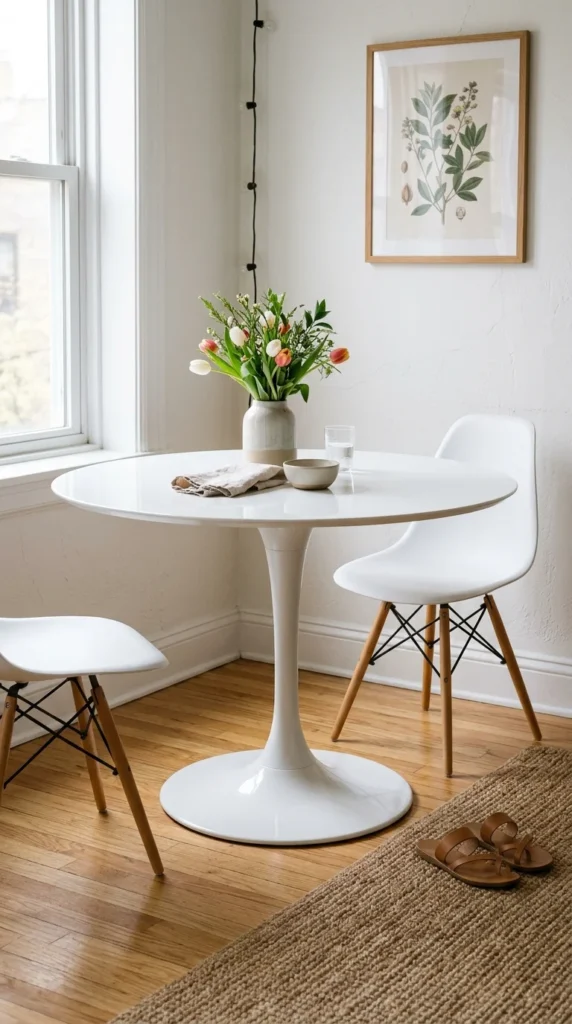
Four-legged tables can create a “forest” of posts that crowds a small room and limits where people can sit. A pedestal table has just one central support, which gives you much more legroom and flexibility. You can tuck chairs in further, and nobody bangs their knees on a table leg. In a tight dining area, that makes a real difference to comfort.
7. Benches
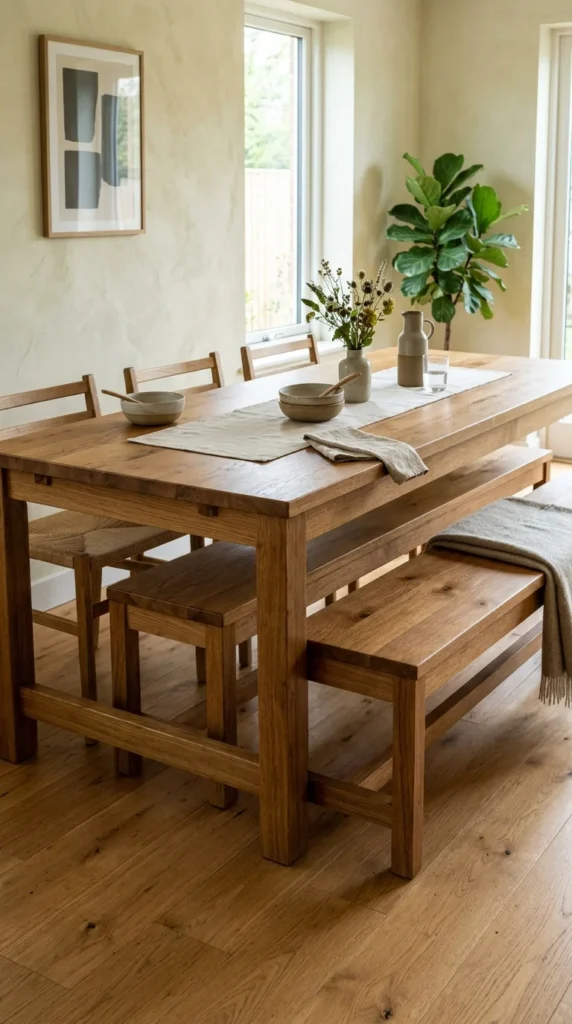
Benches are a handy alternative to standard chairs. They have no backs, so you can slide them fully under the table after a meal and keep the walkway clear. That’s especially useful in narrow rooms or pass-through spaces. A bench can also seat more people than individual chairs, particularly kids, so it’s a practical pick if you sometimes host a bigger group.
8. Multifunctional Lighting
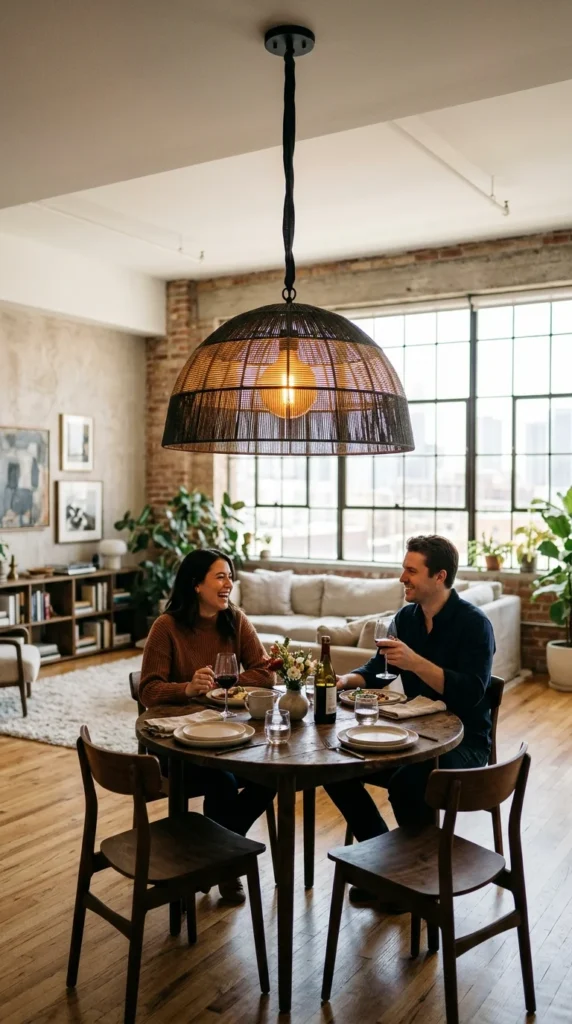
In a small or open-plan home, lighting can act like a “virtual rug” that marks out the dining zone. A low-hanging pendant or a statement chandelier pulls the eye upward, so you notice the height of the room instead of the limited floor space. Choose a fixture with a bold look and your dining area gets its own identity, no walls or dividers required.
9. Vertical Storage
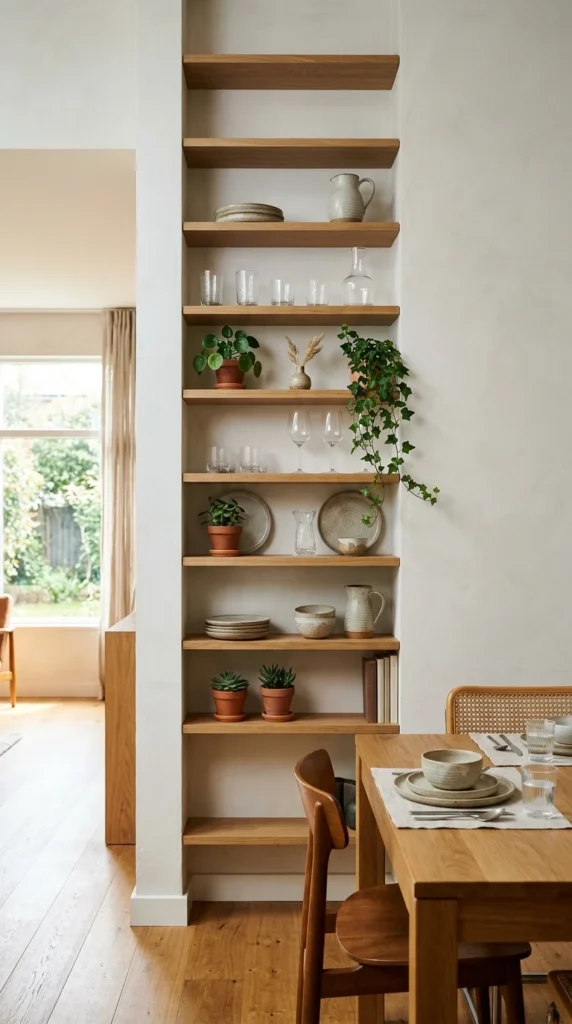
When the floor is full, use the walls. Floating shelves and tall, narrow cabinets can hold plates, wine glasses, and linens without taking up precious floor space. Keep the things you use most at eye level and put the decorative pieces higher up. It looks organized and intentional, and it keeps the path around the table clear.
10. Neutral Palettes
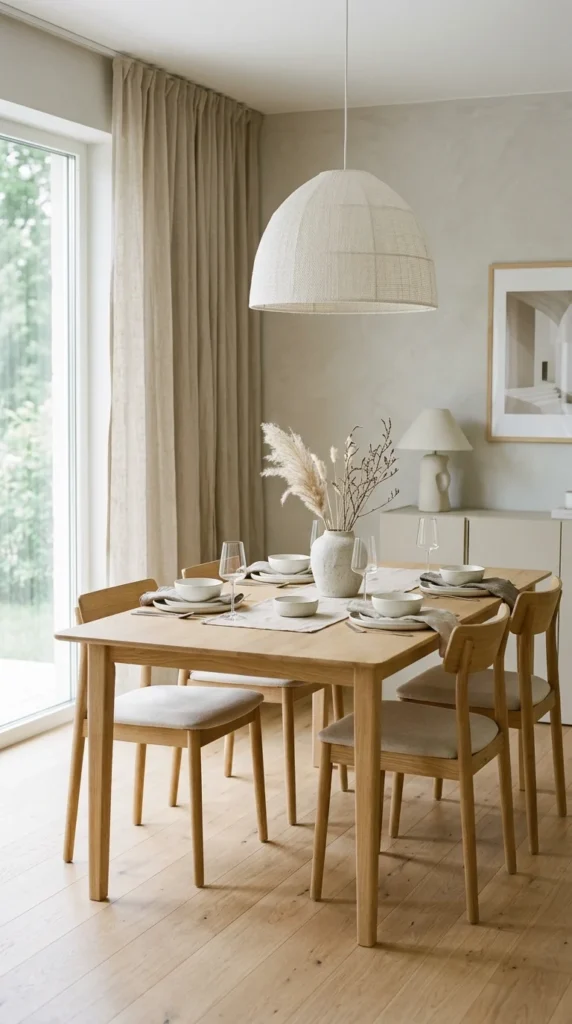
A light, neutral palette makes a small room feel more open. White, cream, soft grey, and pale wood all reflect light and blur the edges between walls and ceiling. To keep a neutral room from feeling cold, layer in different textures, like a jute rug, linen napkins, and a wooden tabletop. You get warmth and interest without piling on heavy colors. For more color inspiration, you can browse these dining room ideas from Farrow & Ball
11. Window Seating
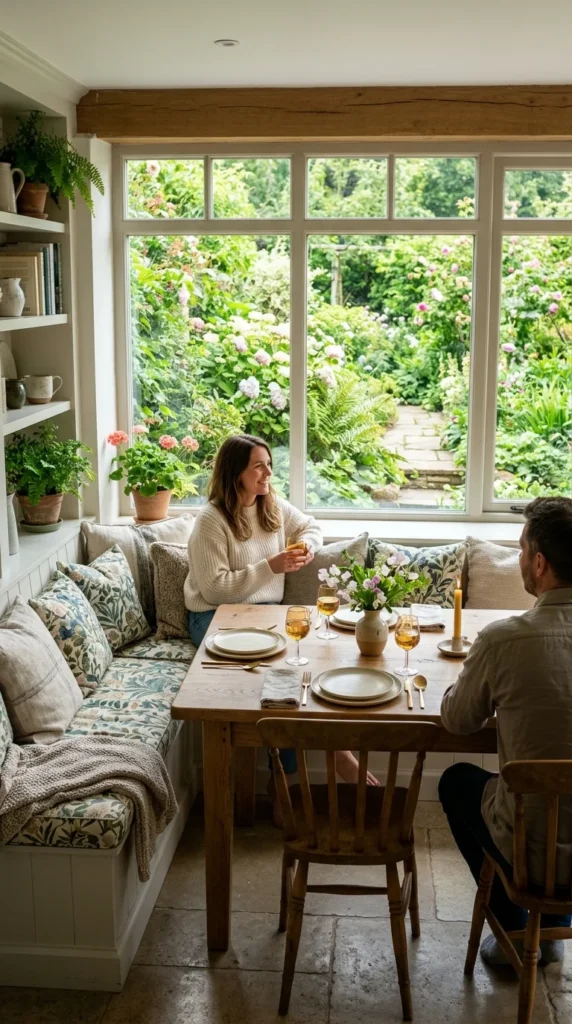
If your dining area is near a window, make the sill or a built-in window seat part of your seating. It turns “found space” into somewhere to sit, and it gives diners a view, which helps the area feel less enclosed. Daylight pouring over the table also makes meals feel brighter and more cheerful.
12. Drop-Leaf Tables
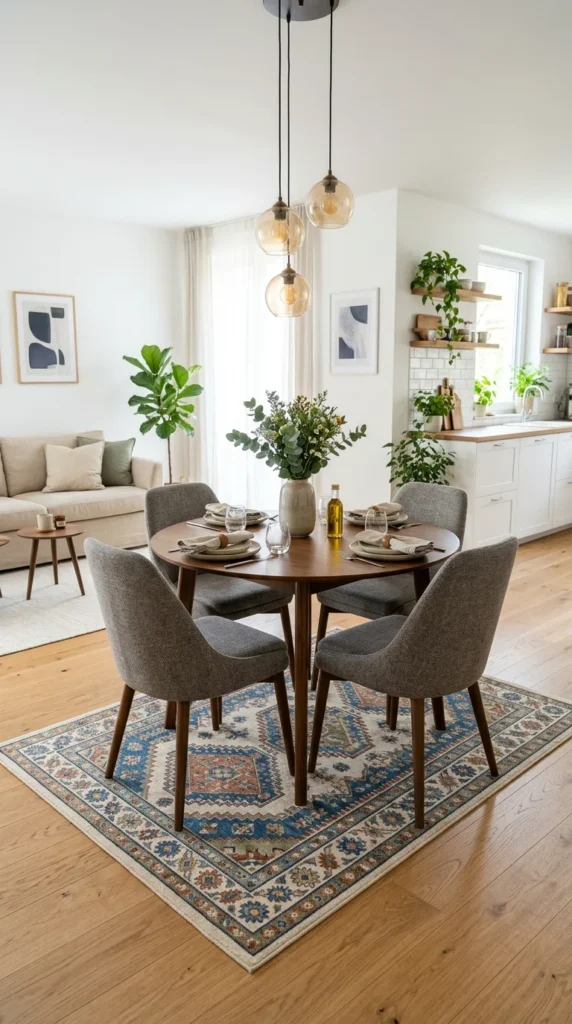
The drop-leaf table has stuck around for good reason. Keep both leaves down for a tiny footprint, raise one for a solo meal or a little workspace, or raise both when you’re hosting dinner. That flexibility makes it a smart buy for renters and homeowners who need their furniture to work harder in limited space.
13. Rug Zoning
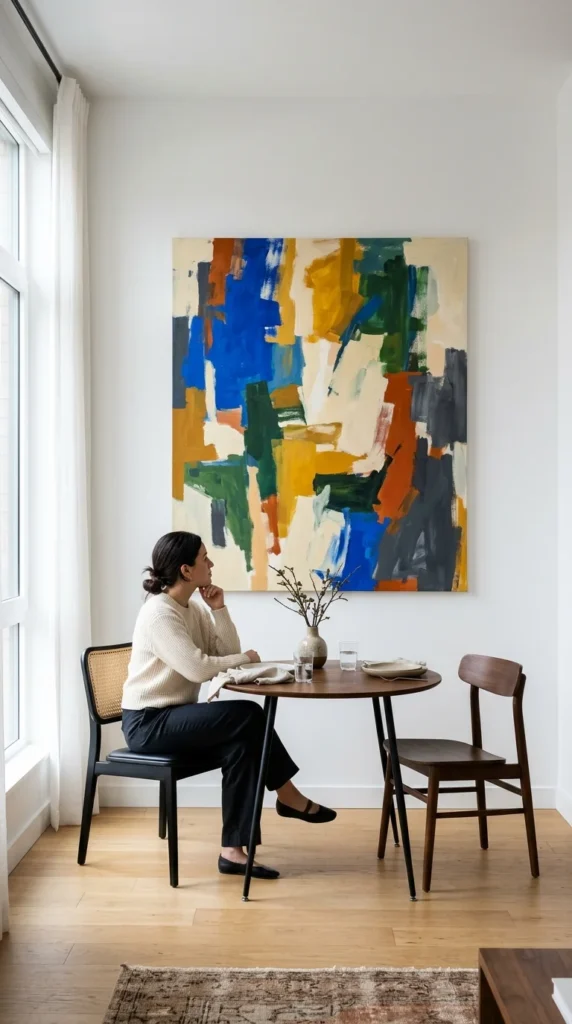
When your “dining room” is really just a corner of the living room, a rug does a lot of the work. It creates a boundary that shows where the dining zone starts and the next zone ends. Go for a low-pile or flat-weave rug so chairs slide easily. Pick a size big enough that the chairs stay on the rug even when they’re pulled out.
14. Minimalist Art
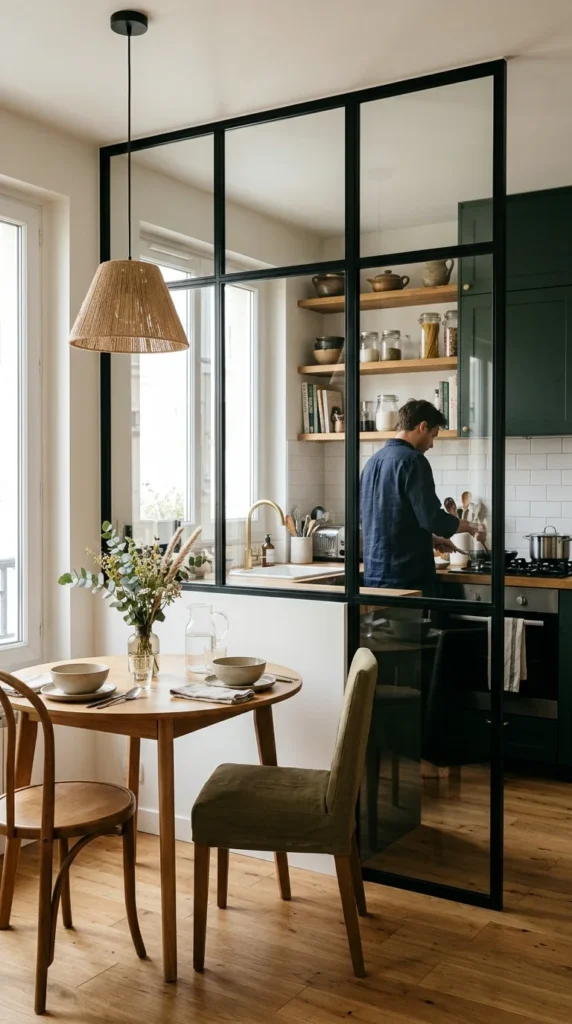
In a small room, lots of little decorations can add up to visual noise. Choose one large, eye-catching piece of art instead. It gives the room a focal point and a sense of scale. A single big canvas or framed photograph makes the space feel deliberate and gallery-like rather than cluttered.
15. Transparent Partitioning
If you need to separate the dining area from another room, skip solid walls and heavy bookcases. Try glass panels, slatted wood screens, or open shelving instead. These lighter dividers still define the dining zone, but they let light pass through, so neither side feels small or dark.